

Human Rights Watch on UN’s Responsibility to Rape Victims in Darfur
Approaching the one-year mark of a mass rape in Tabit, North Darfur, Human Rights Watch (HRW) has released a dispatch calling on the United Nations to do more to protect the survivors and those still at risk. This publication follows HRW’s October 12 dispatch detailing ongoing violations of women’s rights in Sudan’s conflict zones as well as the regime’s application of repressive and discriminatory laws to diminish the ability of women to participate in public life ...
Court Urged to Review “Conflict Minerals” Case
In a statement released today, the Enough Project urged the US Court of Appeals for the DC Circuit to review a “damaging” recent court decision which challenges the Securities and Exchange Commission’s Conflict Minerals Rule mandated by Section 1502 of the Dodd-Frank Wall Street Reform Act ...
Enough Project Statement: Conflict Minerals Court Case is of “Exceptional Importance” and Should be Reviewed
The Enough Project urges the US Court of Appeals for the DC Circuit to review the case, National Association of Manufacturers (NAM) et al. v. Securities and Exchange Commission (SEC), to ensure that a damaging recent decision on the issues of corporate free speech and peace in the Democratic Republic of Congo does not stand without review ...
AU Unveils Long-awaited Report on Crisis in South Sudan
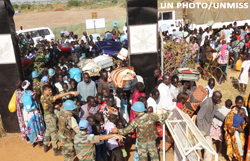
A long-delayed African Union report on the crisis in South Sudan says that the targeted killings of hundreds of Nuer tribesmen in Juba in December 2013, was a deliberate action sponsored by the state. According to the report, the method by which the killings were committed prove their “widespread or systematic nature.” Roadblocks were established around Juba and security forces undertook house-to-house searches. Male Nuers were “targeted, identified, killed on the spot or gathered in one place and killed.” ...
South Sudan Church Leaders Remind Government and Rebels to Respect Peace Deal
Amidst numerous violations of the ceasefire in South Sudan, including politicians’ actions that pose a threat to the recently signed peace agreement, church leaders in Juba reminded the government and rebels to respect the pact ...
Professor’s Departure Raises Questions on Freedom of Expression in South Sudan
The abrupt departure of an academic from South Sudan’s largest university has raised new concerns about the state of free expression in Africa’s newest country ...
Sunstein: Conflict Mineral Disclosure Requirements Critical for Peace and Security in Congo
In a recent Bloomberg article, Cass R. Sunstein (former administrator of the White House Office of Information and Regulatory Affairs) defends the importance of strong corporate regulations as they relate to public disclosures ...
Life as a Surgeon in Sudan’s Nuba Mountains: Atavist Feature
A recent Atavist Magazine feature highlighted the work of Dr. Tom Catena, the only surgeon working in the Nuba Mountains, in southern Sudan ...
Tusk Wars: Inside the LRA and the Bloody Business of Ivory
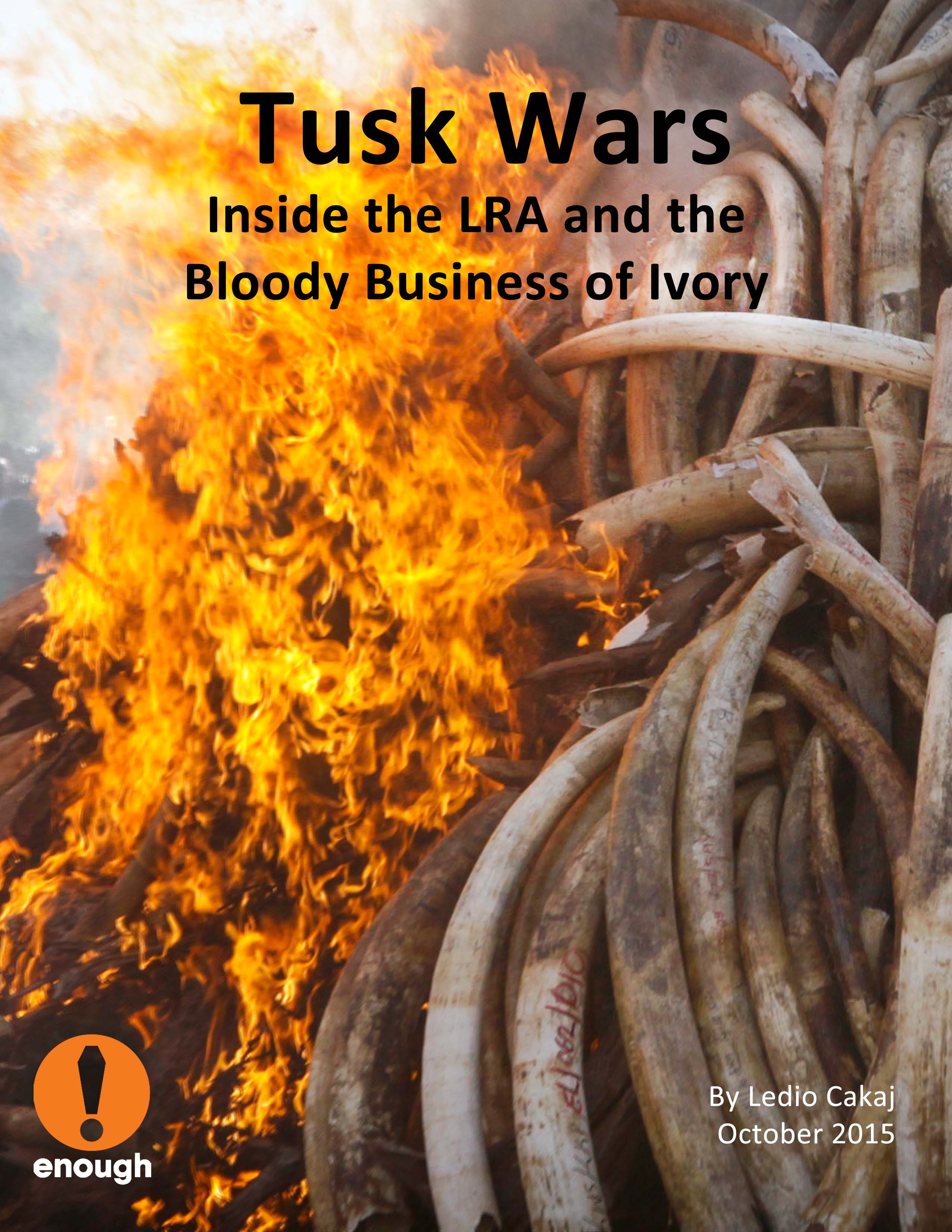
Joseph Kony’s Lord’s Resistance Army (LRA) is part of an onslaught of poaching in central Africa, and continues to pose a threat to local populations, across a swathe of central and east Africa, according to a new field-researched report by the Enough Project. The report, Tusk Wars: Inside the LRA and the Bloody Business of Ivory, tracks how ivory trafficking funds LRA operations and perpetuates violence against civilians. It uncovers new evidence of ivory trafficking into Sudan, including testimony by ex-LRA members of transactions with Sudanese merchants, as well as alleged trade with Sudan Armed Forces officers ...
Sudan Tribune Op-ed: Sudan’s National “Monologue”
On October 10, Sudan President Omar al-Bashir launched a purported National Dialogue in Khartoum, nearly two years after he had first announced his intention to hold a forum to resolve the country’s numerous social, economic, and political issues. In the intervening period, Bashir and the ruling National Congress Party (NCP) handpicked participants, naming a congregation of mostly minor splinter parties, perhaps upward of 100 parties in all. Bashir and his ruling party determined the National Dialogue agenda unilaterally, setting up a 7+7 steering committee of seven parties allied with the government and seven opposition parties. Bashir also gave himself the ...
