

The United Nations Office for the Coordination of Humanitarian Affairs, or OCHA, recently released their third quarter report on LRA activity in central Africa. The report, which identifies LRA activity in the region from July to September 2012, describes a slight decrease in LRA attacks, down to 52 in comparison with 75 in quarter two and 53 in quarter one. Forty-three of these attacks occurred in the Democratic Republic of Congo, and an additional nine in the Central African Republic, primarily in remote border areas. Thirty-nine deaths have been attributed to LRA attacks since January, and 66 abductions have been reported since July.
The number of people displaced by LRA violence has marginally decreased but remains high at 443,000, most of which are internally displaced. The majority of people displaced by LRA violence are in Congo, with 347,000 concentrated in Haut and Bas Uélé districts, which border the Central African Republic and South Sudan.
The humanitarian situation in internal displacement camps remains severe, as insecurity and poor transportation infrastructure in the most affected areas makes humanitarian aid difficult to deliver. Without access to humanitarian aid, many of these refugees and internally displaced persons are without adequate food, shelter, health care, water, or sanitation services.
These updated stats serve to illustrate the ongoing grave impact of the LRA in central Africa, in spite of their relatively small numbers and the fact that soldiers from several countries—including American military advisors—are pursuing them. As Enough Project researcher Kasper Agger recently highlighted with his field dispatch based on an embed with the Ugandan army, major logistical and intelligence challenges are preventing real progress toward ending the LRA conflict. If the current efforts are to succeed, enhanced human and aerial intelligence, increase helicopter support, improved road infrastructure, and better access to LRA-affected areas for the troops involved are urgently needed.
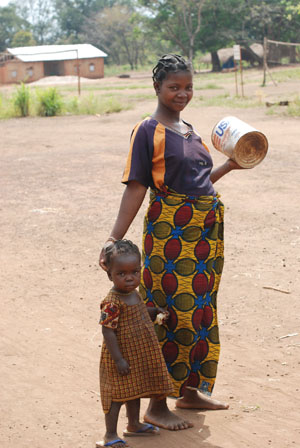
Photo: Congolese refugees in South Sudan who were displaced by LRA violence (Enough / Laura Heaton)